Fleas
Angela's AshesFleas are a concrete domestic hazard in the McCourt family’s life in Limerick and, beyond the single infestation described in detail, part of the book’s larger portrait of poverty and inadequate housing. The episode makes deprivation bodily and immediate: the family’s bed becomes a source of distress, remedies are improvised from water, salt, and labor, and a night’s rest must be fought for. A passing neighbor turns the infestation into comic local folklore, linking the fleas to Limerick’s reputation for poor health and to anti-English historical grievance. Their significance is not that they determine the family’s later migrations, but that they sharpen the contrast between imagined escape and the material hardships that follow the family across its story.
Infestation in the Limerick room
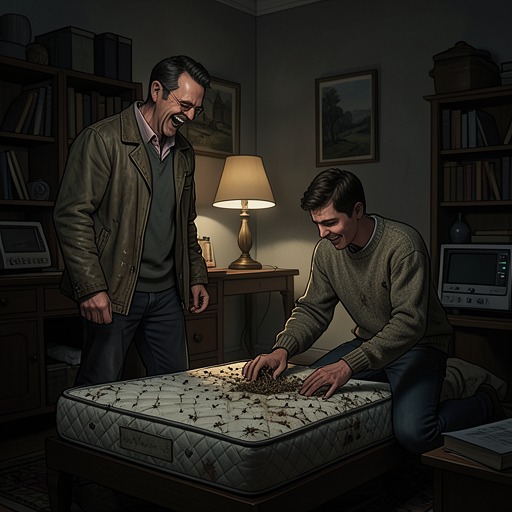
One night, after the family has settled into a room in Limerick, Eugene wakes crying and scratching. When his father turns on the gaslight, the family sees fleas on them. Everyone is roused: the children and twins cry, Angela moans, and the family tries to scratch at the bites. The father dabs the affected skin with water and salt from a jam jar, offering a practical remedy even though the salt stings.
The infestation immediately turns the family’s limited living space into a problem that cannot be ignored. The father drags the mattress out into the street, fills a kettle and pot with water, and beats the mattress with a shoe. Frank is told to keep pouring water onto the ground to drown the fleas that fall from it, making the treatment a shared effort rather than a single adult’s task. Angela remains inside with the twins, while the work continues outside under the Limerick moon. Her concern is for the children’s wet shoes and for the father’s exposure to illness; even the attempt to deal with fleas risks another hardship.
A man on a bicycle stops to ask about the treatment. He recommends putting the mattress back on the bed upside down, claiming that the change will confuse the fleas. He also offers an extended account of their behavior and their supposed connection to the city’s poor health. The father, who has asked the stranger for a cigarette, listens while the man explains his remedy and talks about the cough he attributes to his own life in Limerick. The encounter makes the infestation a neighborhood subject: private domestic trouble draws in local knowledge, joking speculation, and the familiar complaint that life in the city wears down the body.
Local folklore and material conditions
The cyclist turns fleas into a comic counter-history. He claims that there were no fleas in ancient Ireland and that the English brought them in to torment the Irish, contrasting them with the snakes Saint Patrick is said to have driven out. This is presented as the man’s folklore, not as an established explanation. Its force comes from the way an ordinary nuisance is absorbed into the political stories people tell about Ireland: the flea becomes another imagined burden imposed from outside.
The same conversation ties the pest to Limerick’s difficult conditions. The man calls the city a place of weak chests and consumption, then says his own cough came from the Germans. His account is self-contradictory and comic, but it situates the fleas among other everyday troubles rather than treating them as an isolated inconvenience. The father dismisses the talk as characteristic of Limerick men, yet follows the visitor’s practical advice and returns the mattress to the room. Humor does not remove the material problem; it gives the people enduring it a way to talk about it.
In the morning, the family can see the consequences of the night’s infestation in the pink welts and scratches. Angela makes tea and fried bread, while the father again applies salty water and takes the mattress outside, hoping the cold will kill the fleas. The sequence offers no secure resolution: the family has worked through the night and repeats its treatment the next day, still hoping for a night’s sleep. Domestic labor, rather than reliable sanitation or protection, is what the family can use against the infestation.
Fleas in the wider pattern of deprivation
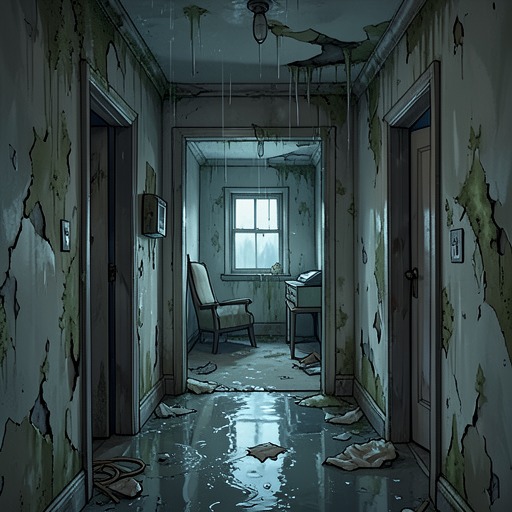
The episode’s small scale is central to its significance. Fleas do not cause the family’s poverty, but their presence turns the conditions of the room into an immediate bodily ordeal. The family has few resources for dealing with them: a jam jar, salt water, a shoe, and the effort of moving and beating a mattress. The children’s interrupted sleep and the father’s strenuous work show how a household nuisance consumes time and energy already scarce in a poor family.
Across the book’s wider account, fleas belong to a world of persistent hardship rather than to a single comic anecdote. The story later recalls the family’s journey to America: relatives send money, secure a steamer trunk through the Saint Vincent de Paul Society, hire a van, and see the family onto a ship. That passage establishes how much the family’s movement depends on assistance and limited means. It does not establish that fleas prompted the voyage; instead, it places the Limerick infestation within a life in which basic security must repeatedly be assembled from whatever help and resources are available.
The family’s subsequent movements also resist any simple idea that migration automatically ends deprivation. The father later agrees to go to England for factory work in Coventry, leaving after Christmas and telling Frank to take responsibility at home. After one money order arrives, further payments stop, and Angela must again seek assistance while the children take on household duties. Much later, Frank arranges passage to America on the Irish Oak for fifty-five pounds. These episodes concern work, separation, and the means of travel, not a continuing infestation; read beside the flea scene, however, they clarify the book’s larger distinction between the hope of escape and the material insecurity that makes escape necessary.
Narrative significance
Fleas make poverty visible without turning it into abstraction. The scene proceeds through specific tasks—lighting the gas, mixing salt water, carrying water, beating the mattress, and trying again the next morning—while the family negotiates the immediate question of whether it can rest. The pest is an active pressure on domestic life: it interrupts sleep, draws the family into labor, and invites a stranger’s advice and stories.
The episode also balances hardship with comic speech. The cyclist’s claims about the English, Saint Patrick, snakes, and fleas enlarge a local nuisance into a playful national myth, while the father’s impatience restores the scene to the practical matter of getting the mattress back inside. That contrast keeps the folklore from erasing the family’s difficulty. Fleas remain pests to be endured, and the joke that frames them cannot substitute for adequate housing or reliable relief from them.